





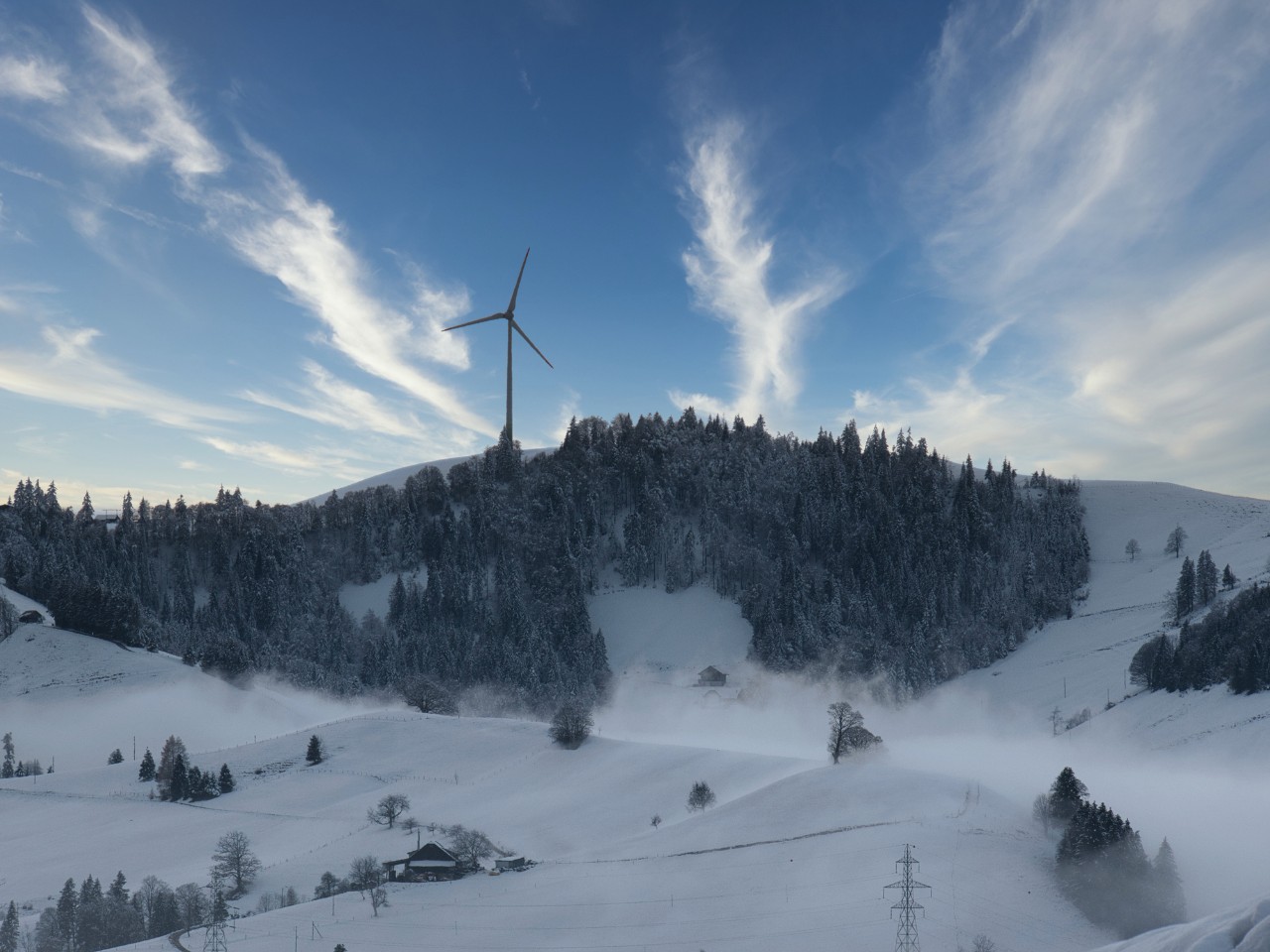
 Eine Windenergieanlage auf einem verschneiten Hügel
01.12.2025 | Winter energy share of 67%
Why wind energy is indispensable
Switzerland faces a critical challenge: with the gradual phase-out of nuclear energy and increasing electrification, the demand for electricity is rising, particularly during the winter months. At the same time, production from conventional sources is declining, widening the winter electricity gap. To bridge this gap, wind energy is an indispensable addition to Switzerland’s energy mix.
The current Swiss energy mix is predominantly powered by hydropower and nuclear energy. While hydropower reliably produces electricity in summer, its output diminishes in winter when river flows are lower. Solar energy cannot fully compensate for this deficit due to shorter days and often overcast skies during the winter months.
The result: Switzerland increasingly imports expensive winter electricity from abroad, often generated from non-renewable sources. With the phase-out of nuclear energy, this dependence will only grow unless action is taken promptly.
Wind energy: a reliable partner for winter
A striking example of wind energy’s performance in Switzerland is the Lutersarni wind turbine, operated by the Axpo Group. With an average annual production of 2.9 GWh over the past twelve years, it exceeds the forecasted 2.4 GWh per year by around 20%.
Notably, during the winter half-year the wind turbine proves to be an essential energy source: more than two thirds, nearly 67%, of its total electricity production from 2013 to 2025 occurred during the winter months.
These figures vividly demonstrate the importance of wind power for ensuring a secure energy supply during the winter months.
Information and awareness as the key to acceptance
Despite these advantages, there are public concerns about wind energy in Switzerland. Common criticisms include its impact on the landscape and potential effects on wildlife. Axpo addresses these concerns with a clear focus on education and dialogue.
One example is the ski lift quiz launched this winter in eleven major ski resorts, including Arosa-Lenzerheide and Davos-Klosters. This initiative playfully educates winter sports enthusiasts about wind energy.
From what wind speed does a wind turbine start to turn?
Questions like these provoke thought and engage the public in an entertaining way, reaching a wide audience amidst the enjoyment of winter sports.
Active across Switzerland
Axpo brings decades of experience in renewable energy development and is a leading project developer for wind energy in Switzerland. Projects like Lutersarni and new wind park plans in Flumserberg, Wil, Dreibündenstein, and Tannenberg demonstrate Axpo’s ongoing central role in shaping Switzerland’s energy future.
Utilising cutting-edge technologies and rigorous environmental assessments, the wind farms are designed to equally consider the needs of people and nature.
Discover the 10 benefits of wind energy and learn more about our wind energy projects: www.axpo.com/windenergy


