




25.11.2026 | Greater efficiency, fewer emissions
Modernising the Otelfingen anaerobic digestion plant
At the solid-waste anaerobic digestion plant in Otelfingen in the Zürcher Unterland region, grass clippings, leaves and vegetable scraps are processed into biogas and natural fertiliser. Axpo Biomasse AG now plans to convert its existing industrial building into an enclosed reception and pre-treatment hall for green waste. This will help improve operations at the Otelfingen site and reduce odour emissions.
Mowing the lawn, pruning shrubs or preparing vegetables leaves organic residues behind. For the biogas plant in Otelfingen, these materials are a raw material: anaerobic digestion produces biogas, which is used to generate electricity. The remaining digestate is used to produce natural fertiliser.
Before green waste can be turned into biogas, however, it needs to be pre-treated. Axpo therefore intends to convert its existing industrial building on Libernstrasse, on the neighbouring plot, into an enclosed reception and pre-treatment hall for green waste. Green waste is already received at the Otelfingen site. The new enclosed hall will help improve operations, reduce the amount of contaminants in the resulting digestate and lower odour emissions.
The existing solid-waste anaerobic digestion plant will continue to operate unchanged, and its overall capacity will remain the same.
Built in 1996, the plant processes 12,000 tonnes of biogenic waste each year. This includes green waste collected from private households, branches, leaves, shrub prunings and grass clippings, as well as vegetable scraps and organic kitchen waste.
The new green waste reception hall
In the planned hall, pre-treatment begins with weighing and inspecting incoming deliveries. After sorting, a shredder breaks down the green waste. Contaminant separation and screening then help remove unwanted components from the material.
These steps are also important for the final product. Contaminants removed before digestion never enter the subsequent process. The conversion can therefore reduce the amount of contaminants in the digestate. The aim is to obtain the highest possible quality of input material for digestion, known in technical terms as the “substrate”.
The pre-treated green waste is temporarily stored separately by material type. This ensures that suitable material is continuously available to the biogas plant, regardless of the season. It is then loaded onto on-site transport vehicles and taken in batches to the existing anaerobic digestion plant on the neighbouring plot. Only there does digestion produce biogas and the digestate from which natural fertiliser is obtained.
An enclosed hall, fewer odours
Green waste can generate odours during storage and pre-treatment. Plans therefore include an enclosed hall, a modern exhaust air treatment system and a technically improved airlock system for unloading.
The hall is to be operated under negative pressure. Put simply, the ventilation system extracts air from the building. As a result, air flows into the hall through openings rather than allowing odour-laden air to escape outside. Areas with particularly strong odours, such as those around the shredder and screening equipment, will have dedicated extraction systems. The extracted air is to be treated using activated carbon and UV irradiation before being discharged through an elevated exhaust stack.
An airlock with fast-opening and fast-closing doors, as well as air curtains at the doors, is also planned for delivery vehicles. An air curtain creates a barrier using a stream of air and helps limit air exchange between the inside and outside.
Solar power for the plant and the municipality
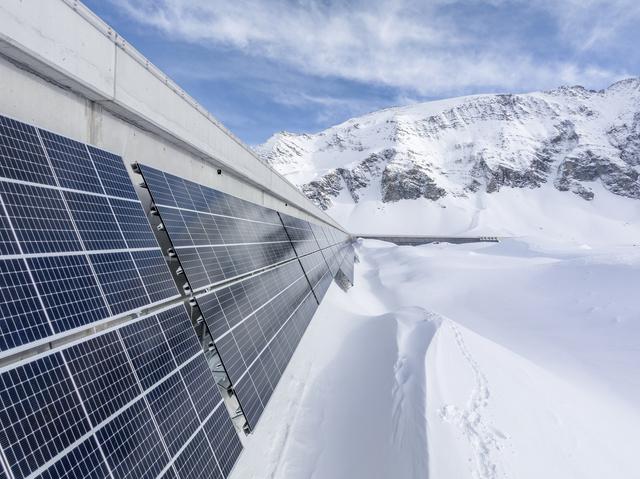
The modernisation also includes the hall’s electricity supply. A photovoltaic system with a capacity of approximately 220 kWp will be installed on the roof. Most of the solar electricity generated is intended to be used directly on site. Surplus electricity is to benefit the Energie-Genossenschaft Otelfingen, the local energy cooperative.
Keeping organic waste processing within the region
The conversion is intended to ensure that organic waste generated in the Zürcher Unterland region can continue to be received and processed locally in line with circular economy principles.
The project is currently undergoing the building permit process. Once the necessary permits have been granted, Axpo intends to move ahead swiftly with implementation. Based on current plans, construction is scheduled to begin no earlier than March 2027. Whether and when construction can proceed therefore depends on obtaining the required permits.


