





22.07.2026 | Electrification for cost-effectiveness, decarbonisation and reduced dependence on fossil fuels
How Switzerland is securing its electricity supply
The debate surrounding the Axpo Energy Reports has shown that: the industry, politicians and society share an overarching goal: the electrification of the energy system, which will lead to decarbonisation, a reduction in our dependence on fossil fuels and optimised cost-effectiveness. This is where the greatest leverage lies – not only for climate protection, but also for our country’s geopolitical resilience and for ensuring attractive energy prices.
The electrification of transport and heating will increase electricity demand. Furthermore, the decommissioning of nuclear power stations will result in the loss of a considerable proportion of electricity generation. The challenge is particularly acute in winter – during the winter half-year, domestic electricity generation is already lower than demand. By 2050, around 25 TWh of additional winter electricity generation must be established. The expansion of renewable energies (e.g. wind power) is a key measure in this regard, but it will not be sufficient and must be focused on the winter electricity supply.
We demonstrate in 12 key points that the challenge of winter electricity supply can be solved – with a smart combination of several technologies.
Switzerland must secure its electricity supply in winter in the long term. If Switzerland continues as before, the electricity supply will be at risk – with enormous risks and costs for the economy and society. The key to resilience is not a single technology, but the right mix. Every technology has its advantages and disadvantages. Time is of the essence, as rising demand driven by electrification, population growth and digitalisation (including data centres) is coinciding with the phasing out of nuclear power. Demand for electricity could even rise much more sharply than assumed in the models – for example, due to the accelerated expansion of data centres or faster electrification. Furthermore, large-scale additional electricity generation capacity cannot be brought online within a few years; lead times for such infrastructure projects are very long, particularly in Switzerland.
At the same time, however, it has virtually no potential for expansion and is even being scaled back due to environmental regulations. The few remaining opportunities for expansion may, at best, offset this reduction, but current trends point in a different direction.
Furthermore, it gives Switzerland valuable time to develop other technologies and significantly reduces the cumulative expansion costs for total electricity production by 2050 (savings in the region of 10 billion).
In the interests of technological openness, Axpo also supports the lifting of the ban on new nuclear power stations.
However, the potential lifting of the ban on new nuclear power stations does not yet constitute a decision to build. Finally, it should be emphasised that even in a nuclear energy scenario, the rapid expansion of winter electricity sources such as wind power remains important, as the construction of new nuclear power stations takes a long time, whilst electricity demand is rising. The issue of risk-sharing is central and unresolved. The greatest risks for investors are political, regulatory and economic in nature. This calls for a sensible arrangement for risk-sharing. Without such an arrangement between the private sector and the state, the financial risks associated with new nuclear power stations would be unsustainable for any company. We have reflected the higher political, regulatory and economic risks through increased capital costs. All significant cost components have been taken into account in the calculations of the Axpo Energy Reports, including the full costs of waste management and decommissioning.
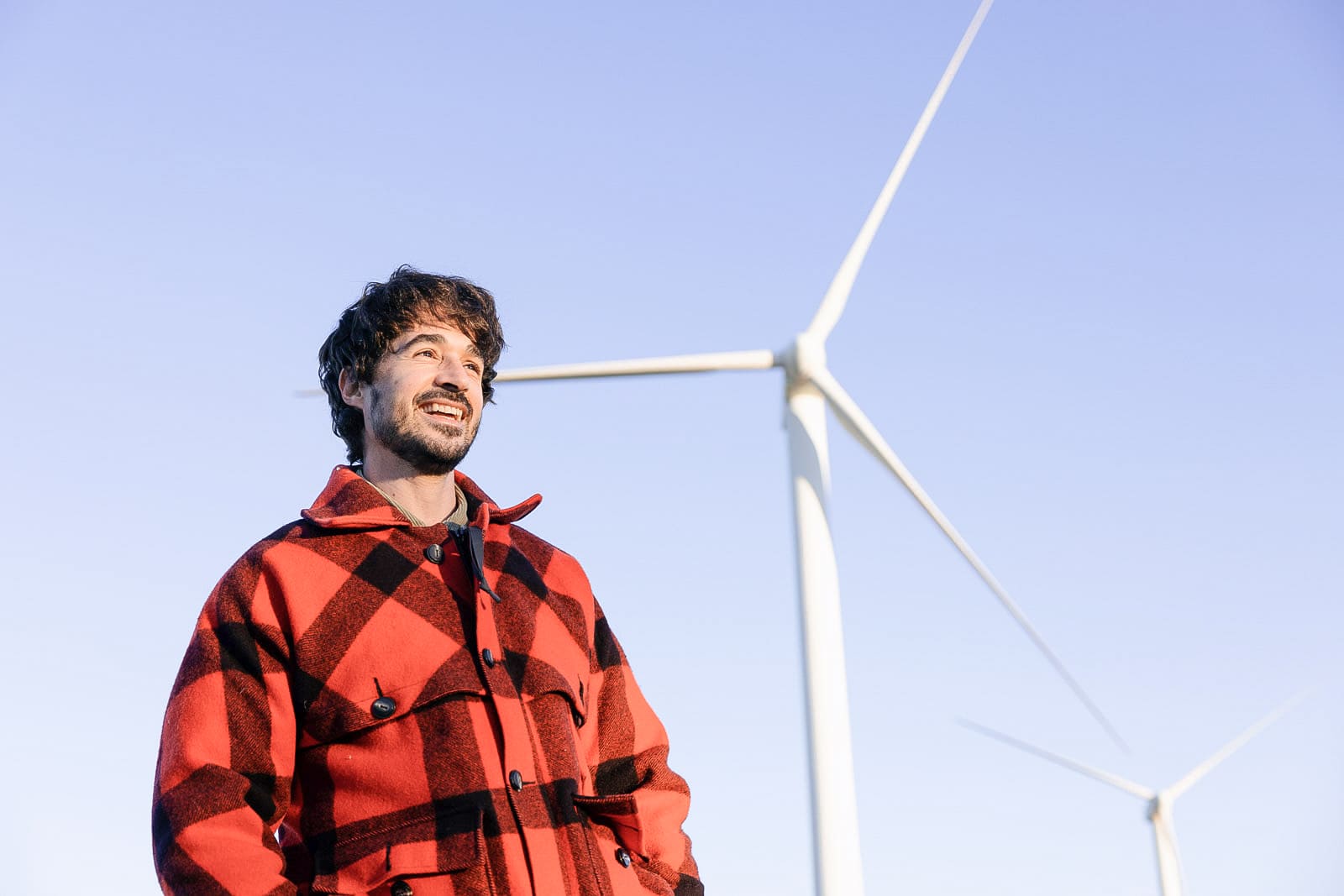
Axpo is involved in wind energy project development in Switzerland and across Europe. Around two-thirds of wind power generation takes place during the winter half-year – and it is particularly cost-effective. The Acceleration Decree is now in force – the focus is now on consistent and rapid implementation at cantonal level. Cantons such as Lucerne, Graubünden and St Gallen have already submitted ambitious structural plans. The expansion of wind power will reduce dependence on oil and gas. Furthermore, it should not be forgotten that public acceptance of PV was also lower at one time. The more a technology is deployed, the more likely it is that (local) acceptance will increase. Nevertheless, acceptance – particularly at local level – remains the greatest challenge for the expansion of wind energy.
Both scenarios in the Axpo Energy Reports envisage further expansion of solar energy. Axpo and its subsidiary CKW are active in the solar energy sector and welcome the current expansion. However, this expansion must become smarter, more beneficial to the grid and more cost-effective. Photovoltaics make their main contribution in summer – in winter (December to February), however, solar energy generated on rooftops produces very little (around 8 per cent of annual production). At the same time, we are already seeing massive electricity surpluses across Europe in summer, accompanied by high costs for grid stabilisation and negative electricity prices, which have a negative impact on all investments, including, for example, those in hydropower. It is also important to make this distinction with regard to the cost issue: small rooftop PV systems are more expensive than larger systems and, overall, are by far the most expensive form of electricity generation, particularly in winter when all costs are taken into account.
The most cost-effective option would be large ground-mounted installations, but these are unlikely to make a significant contribution in Switzerland due to the nature of the land.
They can be built within a few years and step in precisely when renewable energies cannot meet demand on their own. Modern power stations are highly efficient, and the waste heat can be used in a steam cycle to increase electricity generation. The overall picture of Switzerland’s carbon footprint in 2050 must be put into context. The additional CO₂ emissions from gas-fired power stations would be very low. In the long term, CCS, biomethane or hydrogen will be added as low-emission solutions.
Today, the lion’s share of funding is spent on small-scale photovoltaic systems, which not only have the highest generation costs but also, by far, the lowest proportion of winter electricity. Funding must be consistently allocated to winter electricity in a technology-neutral manner.
The Axpo Energy Reports were compiled without bias towards any particular technology or outcome – in part in collaboration with ETH Zurich, the Paul Scherrer Institute and a cross-party advisory board. The reports were widely received with interest and have stimulated the debate surrounding centralised winter electricity. However, some reactions are based on misunderstandings. We therefore address the most common misconceptions here.
Self-consumption reduces the share of grid costs and grid surcharges, which must nevertheless be borne by the general public. As grid costs are essentially fixed, self-consumption does not reduce the total grid costs; they are simply spread across fewer people. The reports make this real-world effect transparent and quantify it – thereby helping to bring objectivity to the debate on cost allocation based on the polluter-pays principle. A detailed examination of the topic can be found in the technical article on implicit subsidies by our Head of Corporate Regulatory Management, Fabian Feger.
The cost assumptions for solar and batteries used in the reports are based on a wealth of up-to-date data for systems currently installed, including data from scientific sources, and take learning curves into account.
The costs of new nuclear power stations are heavily driven by regulatory and political factors. Reliable cost figures can only be determined once a project has been developed in detail. The reports use well-founded assumptions and transparently demonstrate how sensitive production costs are, for example, to an extended construction period. This is precisely why we are calling for a clear regulatory framework with the state assuming the risk as a prerequisite, as these financial risks would be unsustainable for any company. The costs of a new plant have been derived from the actual costs of new construction projects in the Western Hemisphere and have essentially been adjusted only to avoid the errors that are now well known. Regarding the recurring question of insurance against nuclear damage: in Switzerland, operators are liable with their entire assets. This is unique internationally.
Furthermore, the liability that may arise from a nuclear incident inside or outside the plant is comprehensively regulated by an established, internationally co-ordinated liability and compensation regime. This insurance cover is governed by international agreements which Switzerland has ratified.
Such criticism comes from both sides. Some say future demand will be lower than forecast, whilst others say it will be higher. Current demand is stable, partly because efficiency gains in particular have so far offset the increase. However, the forthcoming electrification of transport and heating, as well as population growth, will outweigh this effect – there is broad scientific consensus on this.
The Axpo Energy Reports expressly emphasise that electricity imports remain important for security of supply in all scenarios. The scenarios rely primarily on domestic generation, underpinned by close cooperation with neighbouring countries – for this, a regulated relationship with neighbouring states is essential. However, high dependence on imports alone is not a reliable pillar for winter supply.
Conclusion: Working together to achieve a smart energy mix
The Axpo Energy Reports are a contribution to the debate. They demonstrate, based on facts, that the challenge of winter electricity supply can be solved if we combine the strengths of different technologies wisely. Four ‘no-regret’ moves have been identified:
Ensure the long-term operation of existing nuclear power stations
Structurally align the support scheme with winter electricity supply
Accelerate the expansion of wind power – drive forward cantonal implementation of the acceleration decree
Create suitable framework conditions for market-active gas-fired power stations.


