
Natural Gas & LNG Providing reliable energy services
Natural gas plays an increasingly key role in the global energy transition. When the sun does not shine and the wind does not blow, natural gas can act as a backup, ensuring a stable and reliable energy supply.
In liquefied form (LNG), it has become a global commodity, enabling the transportation of natural gas across long distances and connecting markets worldwide. Providing a reliable and flexible energy supply, natural gas also offers a much cleaner alternative to other fossil fuels on the journey towards a low carbon future.
Axpo is active in the mid and downstream natural gas and LNG business. We provide the expertise needed to transport, store and trade natural gas and LNG both in and beyond Switzerland.
years
of trading natural gas across Europe
TWh of gas
delivered each year by Axpo across Switzerland
LNG cargos
imported to Europe by Axpo a year
As an early developer of the Trans Adriatic Pipeline (TAP) project, Axpo was able to secure long-term gas supply contracts to Europe. In recent years, Axpo has concluded mid-term contracts with Swiss utilities based on gas from TAP, thereby contributing to strengthening Switzerland’s security of supply.
We have actively traded natural gas across Europe for almost 20 years. From the cross-border transportation of natural gas to LNG trading – started more than a decade ago – we supply natural gas to customers ranging from SMEs to large energy-intensive industrial companies. In Switzerland, Axpo already delivers around one Terawatt-hour (TWh) of natural gas a year to some of our larger customers. In Italy, Europe’s third largest gas market, Axpo manages a portfolio of combined-cycle power plants (CCPP) with an installed capacity of 1,800 MW (value corresponding to Axpo’s shares). The portfolio includes three CCPP’s: Rizziconi (100% share), Calenia (85% share) and SEF Ferrara (49% share).
Each year, Axpo imports an average of 25 to 30 LNG shipments into Europe and is one of the leading players in the Iberian LNG market. We are the only energy company in Switzerland with the expertise required for the transportation, storage and trading of natural gas and LNG, both nationally and internationally.
Axpo is committed to innovation. In 2026, we will enter the small scale LNG (ssLNG) market with our first bunkering vessel. A bunkering vessel supplies other ships with fuel. This way we enable the direct use of LNG to fuel both ships and road tankers, which supports the decarbonization of these sectors. We already carry out small-scale bunkering activities using chartered bunkering vessels.
Additionally, Axpo is investing in the expansion of our biogas facilities. Biogas can be processed into bio-LNG, a renewable alternative to fossil LNG which can be used within the existing LNG infrastructure.
What we offer our clients
To best meet the demand from our customers for natural gas, Axpo offers a wide range of products and services tailored to your needs.
Axpo customers benefit from our proven expertise in energy trading, risk management and market analysis, as well as our Europe-wide presence. Your consumption behaviour and risk appetite in terms of price and volume, influence the choice of procurement model. Customers benefit from our comprehensive product portfolio, which offers both standard and tailor-made energy solutions.
We have developed products that give you the desired planning security and free you from the operationally necessary but often complex handling processes involved in gas supply. Axpo takes care of the structured procurement of your required quantities and delivers them according to your specifications, either on a market area or plant basis.
Axpo has been supplying industrial customers and energy suppliers with LNG for more than ten years. Each year, Axpo imports on average 25 to 30 LNG shipments into Europe and is one of the leading players in the Iberian LNG market.
We also offer refuelling ships from small LNG tankers in Spanish and Italian ports (as of 2026).
Axpo offers a wide range of trading solutions which can be customised to your needs. We are active in many gas hubs, which allows us to be very competitive and prompt in our pricing.
Axpo is accredited by numerous energy exchanges and brokerage platforms throughout Europe. We also trade directly with counterparties and across borders in large parts of Europe (cross-border trading). In addition to buying and selling electricity and natural gas, oil and other energy derivatives (cross commodity trading), we also trade purely financial products (derivatives such as options, futures and swaps).
Axpo has extensive experience in operating biomass and biogas facilities. In Switzerland, it is an industry leader in the dry fermentation of organic waste, with 15 biogas plants producing renewable energy and nutrient-rich natural fertilisers.
Elsewhere in Europe, Axpo is also pioneering the development of biogas and biomethane facilities. In Spain, for example, the Noguera Renovables facility uses the manure of livestock to produce biomethane, currently injecting 26 gigawatt hours (GWh) of biomethane into the gas grid every year.
In 2024, Axpo also expanded into the Portuguese, Italian and Polish markets, with several new biomethane facilities due to commence operations in 2026.
Gas supply companies wishing to buy or sell biogas certificates are welcome to contact Axpo. In particular, thanks to our international subsidiaries, we are able to import biogas certificates. If required, these can also be certified with the ‘naturemade star’ quality ecolabel for energy from 100 per cent renewable sources.
FAQ on gas essentials
Natural gas is a fossil fuel composed primarily of methane, formed over millions of years through the decomposition of organic matter.
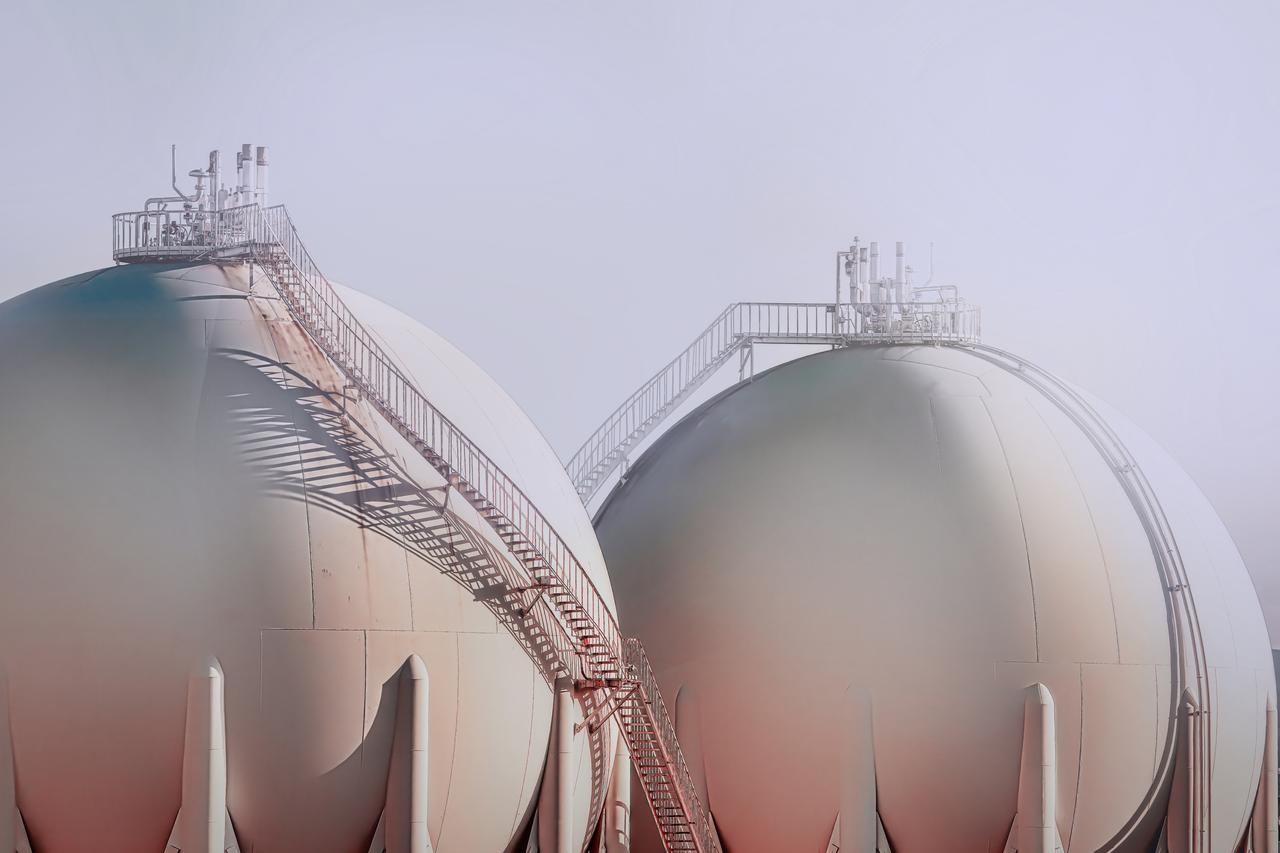
When cooled to approximately minus 162°C, natural gas changes into a liquid that is 1/600th of its original volume. This makes storage and transportation significantly more efficient. Unlike conventional natural gas, which is moved through pipelines, LNG is stored in specialised containers and can be shipped by sea or carried by road.
Biogas can be processed into bio-LNG, a renewable alternative to fossil LNG that can be used within the existing LNG infrastructure. The applications for fossil LNG also apply to renewable bio-LNG, making it a viable solution for the transition to sustainable energy.
Biomethane is produced by processing biogas. This involves separating the accompanying carbon dioxide from the raw biogas using technical processes and purifying the resulting product gas of other components. The biomethane produced in this way is chemically equivalent to natural gas and can therefore be fed into the natural gas grid and subsequently used in the same way as natural gas.
After oil and coal, gas is the third most used fuel worldwide, accounting for around 24 per cent of global energy consumption. Unlike oil and coal, this percentage is still growing, mainly due to the ongoing energy transition because it’s much less CO2 intense than coal or oil (40-60 per cent). Population growth, economic expansion and industrialisation are other important factors accounting for the increase in gas consumption, especially in Asia. Moreover, production and processing in energy-intensive, so-called hard-to-abate industries, such as steel, cement and chemicals, require particularly high amounts of energy and are therefore dependent on energy sources like gas.
Electricity generated from gas produces 40 to 60 per cent less CO2 emissions than coal-fired plants. This makes it a crucial transition fuel on the path to a lower-carbon future. Even under ambitious climate targets adopted by many countries to reach net zero by 2050, fossil fuels will still play a key role in the energy mix, and are expected to account for 20 to 30 per cent of total energy supply by 2050.
Axpo strives to reduce its own carbon emissions and has set itself a net-zero ambition by 2050. In line with the Paris Agreement, Axpo aims to reduce the carbon emissions from its own electricity consumption and the operation of its vehicle fleet to zero by 2030. The emissions in Axpo’s direct sphere of influence are to be decarbonised by 2040 (net zero in Scope 1 and 2). Finally, Axpo also aims to achieve net-zero emissions in its value chain (Scope 3) by 2050.