
.jpg)





Security of supply Hydropower and security of supply in Switzerland
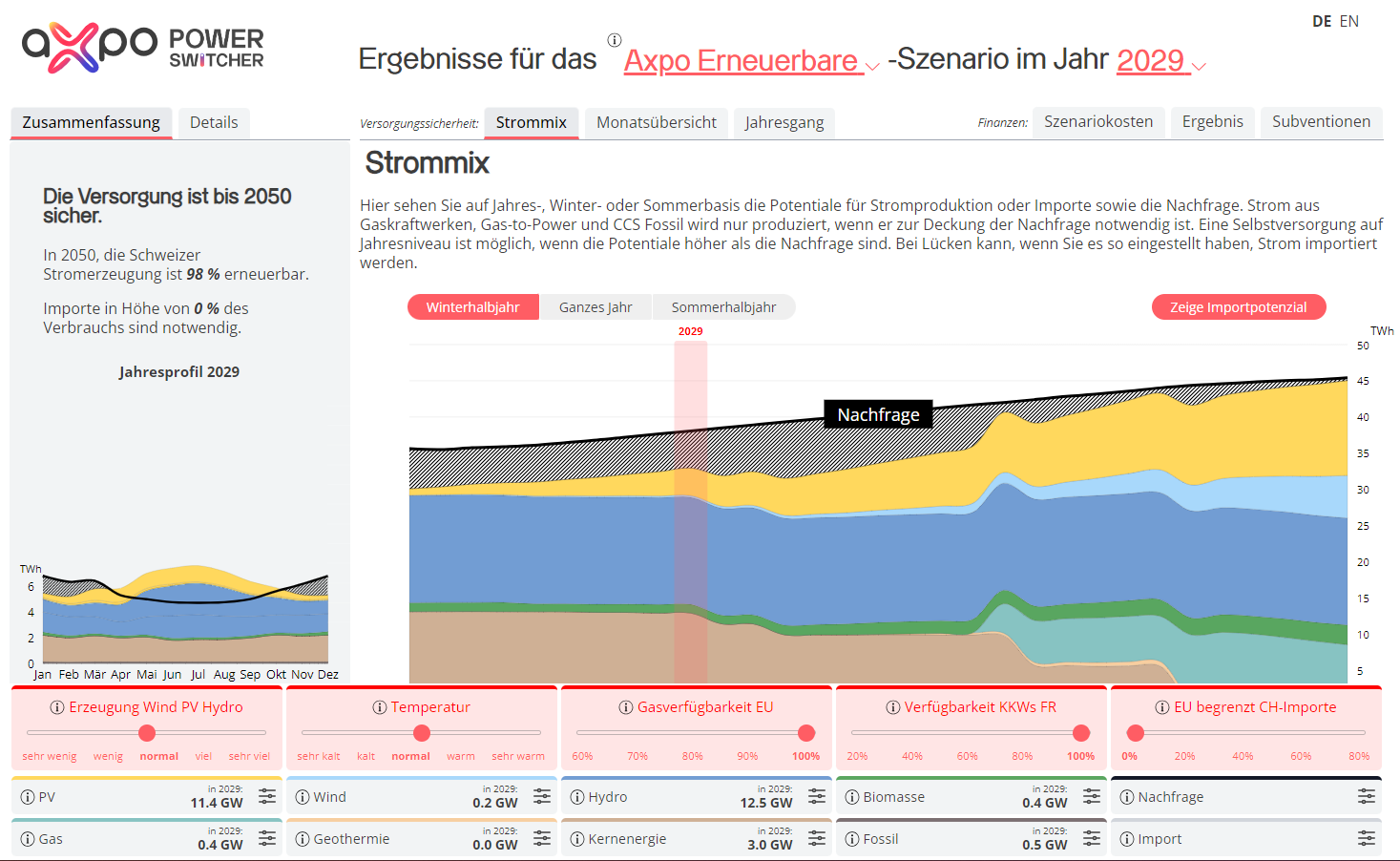
Hydropower plays a crucial role in Switzerland's electricity supply security throughout all seasons.
In summer, rivers carry more water than in winter. Run-of-river power plants on large rivers – as well as many small hydropower plants – use the energy of flowing water to generate large amounts of electricity.
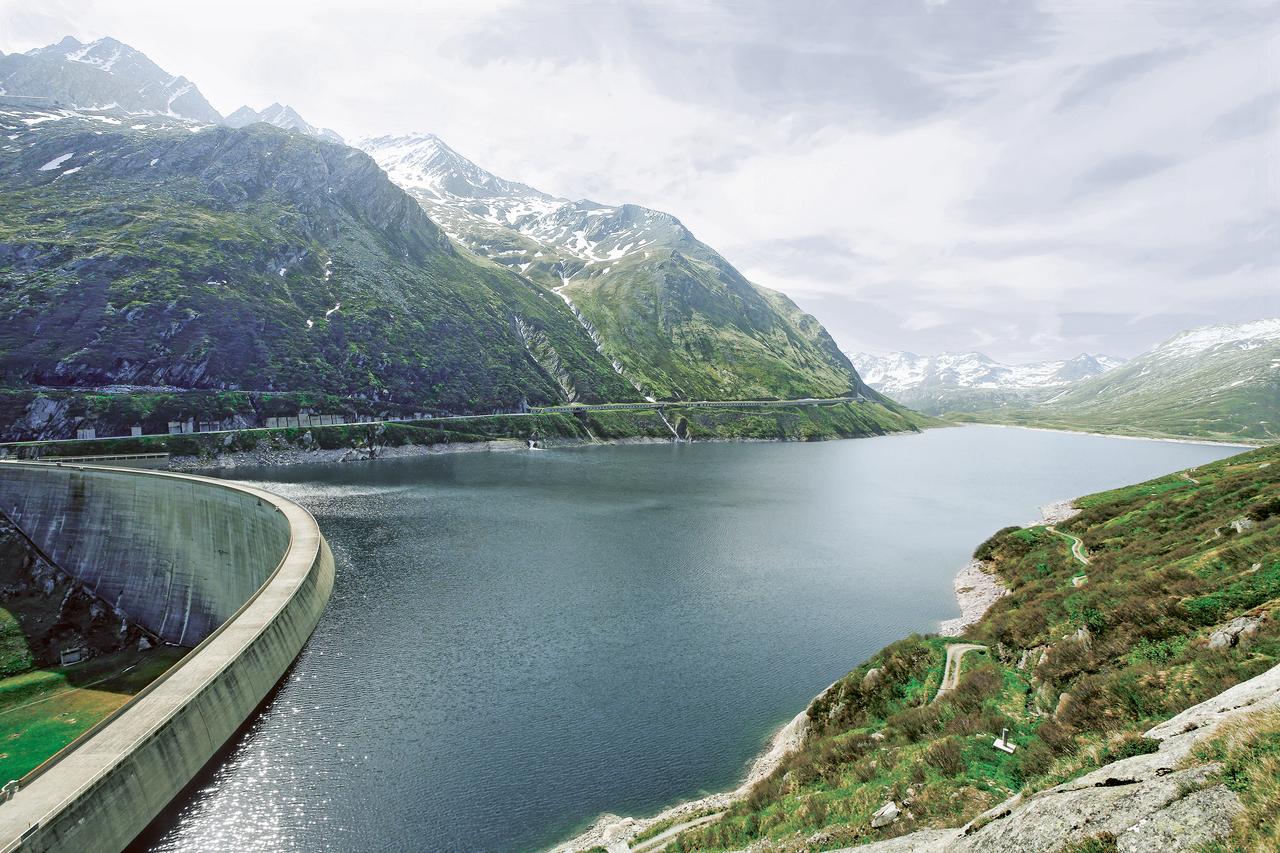
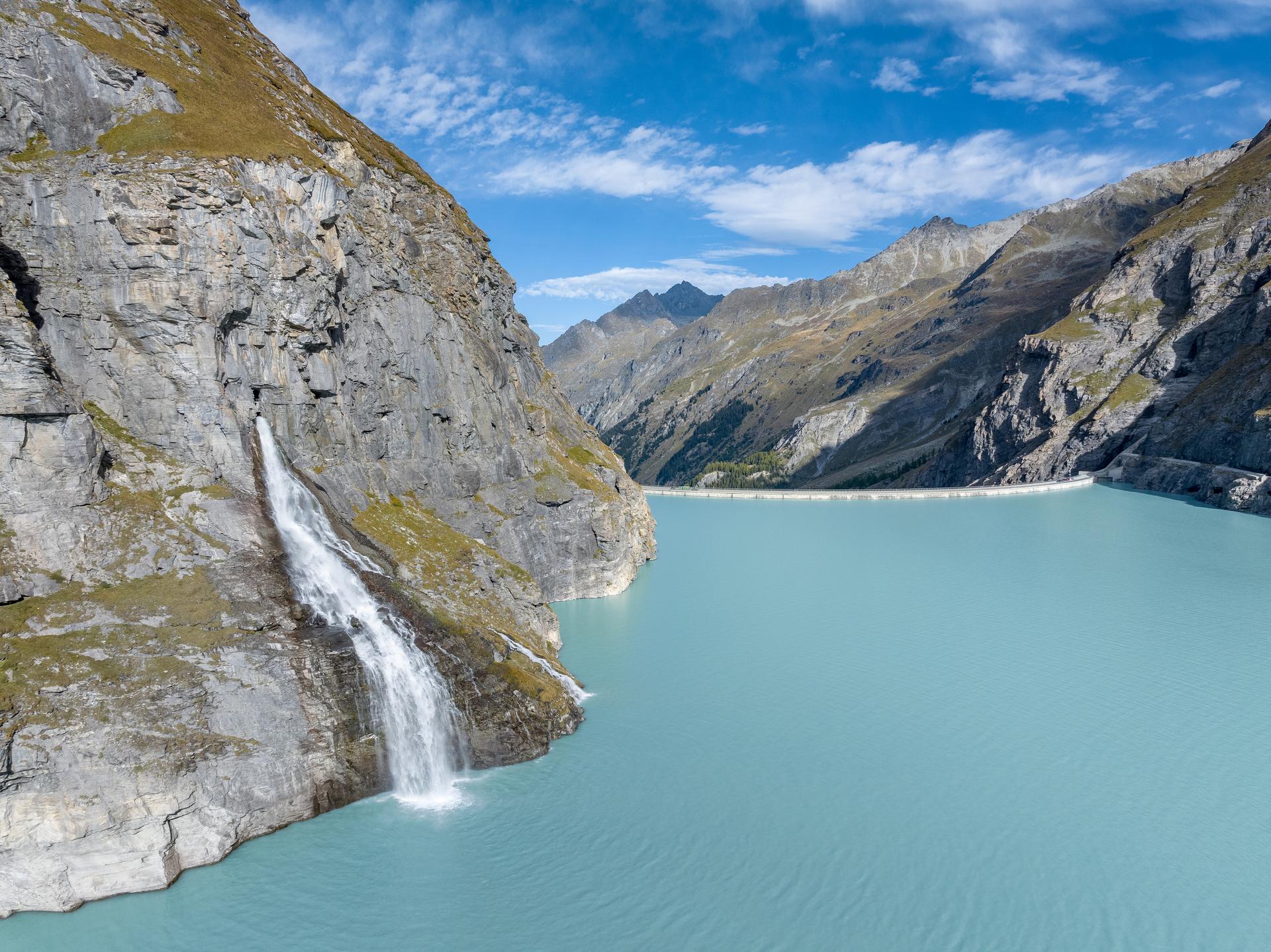
During the warm season, storage power plants use meltwater and rainwater to refill reservoirs. During peak demand periods, storage power plants are also used in summer for flexible electricity production. In winter, when the reservoirs are full, they use this water to produce valuable winter electricity. Storage power plants are therefore a kind of battery that uses summer precipitation and snowmelt to produce electricity in winter.
The battery function is even more pronounced in pumped storage plants – throughout the year. They can store electricity at times when electrical energy is abundant. During peak demand periods, they can supply the electricity again by turbining the pumped-up water.
Overview of types of hydroelectric power plants
Run-of-river power plant
Run-of-river power plants use the flow of a river to generate electricity. They usually have low heads and are used with large volumes of water.
The water (headwater) is directed to the turbines. The kinetic energy generated by the flow drives the turbines, which convert the energy into electricity via generators. The electricity is fed into the power grid. The water used to generate electricity is returned to the river (tailwater).
Run-of-river power plants produce base load energy and, unlike storage or pumped storage plants, can only adjust the amount of electricity they produce to demand to a relatively small extent. The amount of electricity generated depends on the water flow and the head.
Fish ladders and locks are built so that fish and ships can still pass through the river unhindered. Small hydropower plants are defined as hydropower plants, usually run-of-river power plants, with a capacity of less than 10 MW.

Many fish species use different habitats during their life cycle and therefore depend on migrating through waterways. Fish ladders and fish passes enable fish to move along river courses and access different habitats despite the presence of hydropower plants.
Watercourses must be able to fulfill their natural function even when water is abstracted. Residual flow determination specifies the minimum amount of water that must be present at all times below water abstraction points in river and stream beds.
Storage power plant
A storage power plant is a hydroelectric power plant that stores water in a reservoir and uses it for electricity production when needed. In contrast to pumped storage power plants, the reservoir is filled exclusively by natural water inflow. The machine room housing the turbines and generators is connected to the valley via a waterway system. The storage power plant uses the potential energy of the difference in height between the reservoir at the top and the machine room at the bottom.
To generate electricity, water from the reservoir is fed through pressure pipes to the turbines. The resulting kinetic energy drives the turbines, which in turn cause generators to rotate and thus generate electricity. This is then fed into the power grid. The water used to generate electricity is drained off (the lower reservoir is usually a river).
Storage power plants are not usually in continuous operation. Their task is rather to store water that varies depending on weather conditions. Storage power plants are put into operation at peak times of electricity consumption due to daily or seasonal fluctuations. This makes storage power plants important suppliers of flexible peak energy. In addition to generating electricity, storage and pumped storage power plants often also serve as flood protection.
During electricity production at hydroelectric power plants, the water level of the reservoir rises and falls daily at storage and pumped storage power plants. When demand and electricity prices are high, or when the stabilization of the power grids requires higher production, water is released (run-of-river). When electricity demand is low, storage power plants supply only a small amount of electricity to the grid and therefore retain the water (run-of-river). This surge operation leads to artificial water level fluctuations, which can place aquatic ecosystems in streams and rivers under considerable stress. Various measures to reduce the potentially harmful effects of these artificial water level fluctuations are currently being planned and implemented.
Pumped storage power plant
To generate electricity, water from the reservoir is fed through pressure pipes to the turbines. The resulting kinetic energy drives the turbines, which convert it into electricity via generators and then feed it into the power grid. After passing through the turbines, the water flows into the lower reservoir.
Unlike pure storage power plants, pumped storage plants can not only generate peak energy, but also convert surplus electricity generated during so-called off-peak periods into valuable peak energy. To this end, they pump water from the lower reservoir back into the higher reservoir and use it again at a later point in time to generate electricity. In this pumping operation, the generator functions as a motor. It is supplied with electricity from the power grid.
Pumped storage is a proven method of balancing supply and demand in an electricity grid in an environmentally friendly and economical way. Pumped storage plants play an important role in ensuring security of supply and stabilizing electricity grids.

