.jpg)




Axpo Energy Reports How Switzerland can secure its electricity supply
The Axpo Energy Reports provide a comprehensive knowledge base on the future of Switzerland’s electricity supply. They explore how the growing demand for electricity can be met – especially in winter, when consumption is high and production is low.
Four technologies for more winter electricity
Four technologies – wind, nuclear, solar, gas – are at the centre of the analysis. Axpo has examined in detail under which conditions and at what cost they can produce more electricity in winter. Hydropower remains the backbone, but it has very limited expansion potential left.


A smart mix is the solution
A smart combination of these technologies allows for a reliable, low-emission and affordable electricity supply. In the synthesis, we present two scenarios derived from all possible combinations.
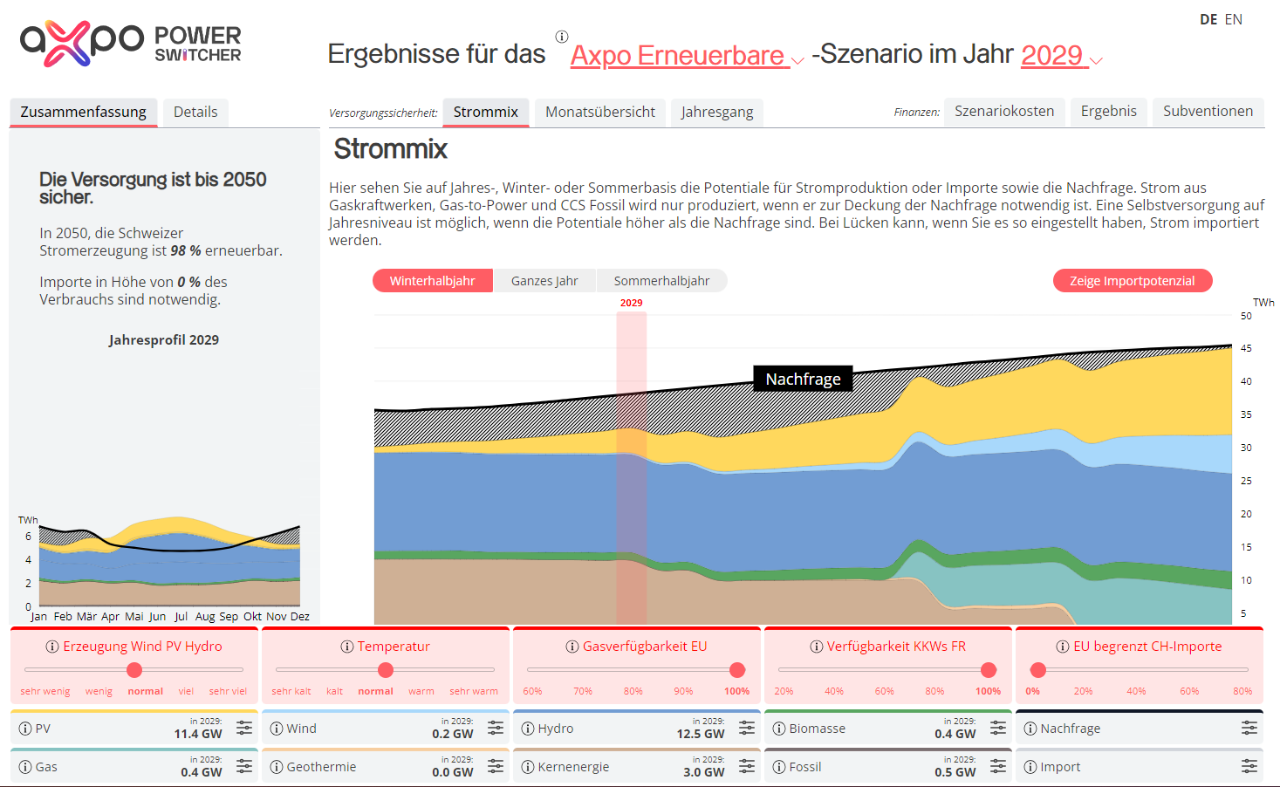
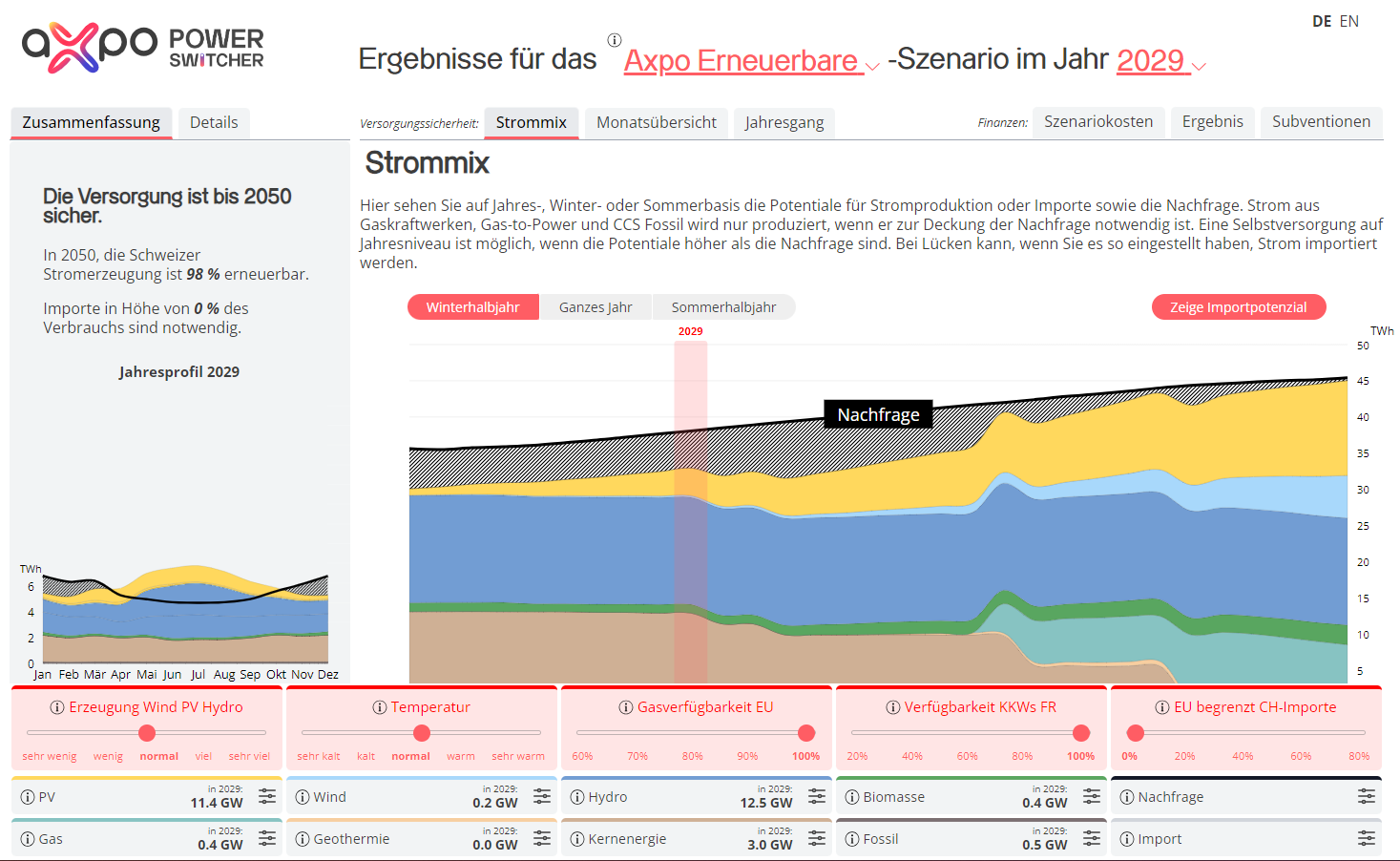
Scenario 1 consists of a balanced mix of hydropower, more photovoltaics, significantly more wind power, and a number of market-active gas-fired power stations as a flexible supplement. The latter meet the steadily growing demand for flexible generation resulting from the expansion of renewables to ensure winter supply, especially during critical weather conditions.
In Scenario 2, Switzerland opts to build two new nuclear power plants. These work alongside other technologies, including hydropower, more photovoltaics, more wind power and flexible, market-responsive gas-fired power stations. However, new nuclear power plants would significantly reduce the need for expansion in all other technologies.
Synthesis
Both scenarios show that a technology-neutral approach remains essential, as demand development, political decision-making and permitting processes have a major impact. A more in-depth analysis of the scenarios and technology comparisons can be found in the synthesis of the Axpo Energy Reports.
- Synthesis View Send email Download
- Synthesis - Key takeaways View Send email Download
These measures are now necessary
Regardless of which scenario Switzerland chooses, four packages of measures must be implemented immediately:
- The existing nuclear power plants must be able to operate for as long as possible – this is the most cost-effective option and buys time for the expansion of other technologies.
- Subsidies must be consistently directed towards winter electricity production.
- The development of wind power in the cantons must proceed more quickly.
- It must become possible to build several gas-fired power plants.
- Analyses by external institutions
Analyses by external institutions
The Axpo Energy Reports are the result of extensive analytical work by around 50 experts from all Axpo business areas, as well as collaboration with external institutions such as ETH Zurich and the Paul Scherrer Institute. The external expert analyses incorporated into the Axpo Energy Reports can be found here:
- Environmental burden of electricity production View Send email Download
- Makroökonomische Analyse (German only) View Send email Download
- Scenario Analysis with Focus on Winter Power Supply View Send email Download
- Auswirkungen der Energieszenarien auf die Verteilnetze (Langfassung) (German only) View Send email Download
- Impacts of the energy scenarios on distribution networks (Short) View Send email Download
- Analyse kantonaler Richtpläne für Windenergie in der Schweiz (German only) View Send email Download
Hydropower and other technologies
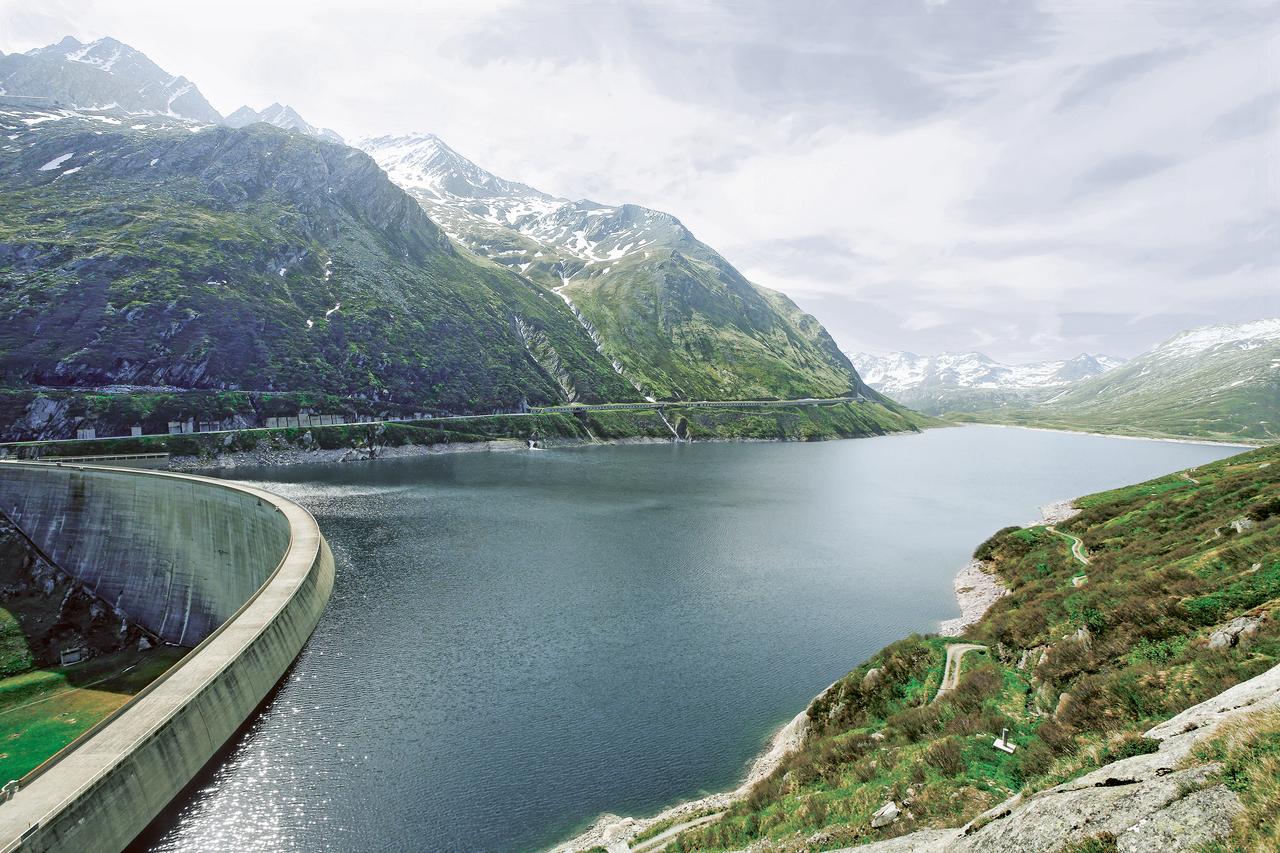
This report shows how storage and run-of-river hydropower plants make a decisive contribution to grid stability and security of supply, and which remaining potentials can still be exploited.
The second report highlights biomass, seasonal storage and geothermal technologies, which are valuable complements to the energy system. Biomass provides regional and flexible energy, while geothermal energy delivers long-term, baseload-capable heat and power resources.
- Axpo Energy Reports: Hydropower View Send email Download
- Axpo Energy Reports: Others View Send email Download
Key questions and answers
The Axpo Energy Reports are intended to contribute to the debate. Swiss energy policy is at a crossroads. If Switzerland continues as before, its electricity supply will be at risk – with enormous risks and costs for the economy and society. The challenge is particularly acute in winter. With the Axpo Energy Reports, Axpo presents a comprehensive analysis of which technologies can supply the necessary winter electricity, under what conditions, and at what cost. It makes clear that the challenge can be met – through a smart combination of several technologies. From the possible combinations, the reports present two scenarios, both of which enable a reliable, low-emission and affordable electricity supply. Both scenarios can be realised without an increase in subsidies. Regardless of these scenarios, the reports identify concrete and urgent need for action in four specific areas.
Regardless of the path Switzerland ultimately chooses, Axpo recommends specific measures that are worthwhile in any case. These are ‘no-regret’ moves in the following key areas:
- Implementation of appropriate regulatory measures to reduce political, regulatory and financial risks, thereby ensuring the continued operation of existing nuclear power plants. This would be the most cost-effective option for large volumes of winter energy and would give Switzerland time to expand other technologies. It would also create the possibility of incorporating technologies not yet available today at a later stage. Given the technical decisions that will be required in a few years’ time, there is a high degree of urgency. In the interests of technological openness, Axpo also supports the lifting of the ban on the construction of new nuclear power plants.
- Structural adjustment of the support scheme towards technology-neutral, transparent and efficient support for winter electricity. Currently, support funds are not being used efficiently enough and primarily lead to the expansion of summer electricity production. However, the challenge lies in winter.
- Accelerated expansion of wind power: Switzerland has high potential for wind energy – although each site must be assessed individually, as uncertainties exist due to the specific Swiss topography. Wind is particularly cost-effective for winter electricity. To harness this potential, the acceleration decree must be implemented consistently and swiftly at cantonal level.
- Creation of suitable framework conditions for market-active gas-fired power stations (in particular waste heat utilisation, no double taxation of CO2). Gas-fired power stations are necessary to secure Switzerland’s future energy supply, but they emit CO2. Various solutions are under consideration in the long term for low-emission operation of gas-fired power stations; however, as things stand today, these are still associated with significant uncertainties regarding availability and costs. The required number of gas-fired power stations depends on the operating life of existing nuclear power stations, the pace of expansion of other technologies, and the development of electricity demand. Once the framework conditions are in place, gas-fired power stations can be built within a few years. They can contribute more or less to the electricity supply flexibly and in line with demand.
If inaction continues regarding the expansion of winter electricity production, the only options remaining will be reserve power stations – in the worst case under emergency legislation – and rising electricity imports.
The reports are the result of in-depth analysis carried out by around 50 experts from all Axpo business divisions, as well as collaboration with external institutions, including ETH Zurich and the Paul Scherrer Institute. An advisory board was also involved, comprising members from across the political spectrum as well as experts from academia, consultancy firms, and environmental and industry associations.
| Grossen | Jürg | National Council | GLP |
| Wasserfallen | Christian | National Council | FDP |
| Imark | Christian | National Council | SVP |
| Nordmann | Roger | Former Member of the National Council | SP |
| Wismer-Felder | Priska | National Council | Die Mitte |
| Schlatter | Marionna | National Council | Grüne |
| Schaffner | Christian | Director | Energy Science Center ETH Zürich |
| Frank | Michael | Director | VSE |
| Keberle | Alexander | Head of regional policy | Economiesuisse |
| Hofstetter | Patrick | Climate and energy expert | WWF |
| Wenger | Felix | Senior Partner | Mc Kinsey |
| Flatt | Markus | Partner | EVU Partners |
Further questions and answers on the individual reports can be found here: wind energy, nuclear energy, solar energy and gas.