.jpg)





Axpo Energy Reports: Wind Energy
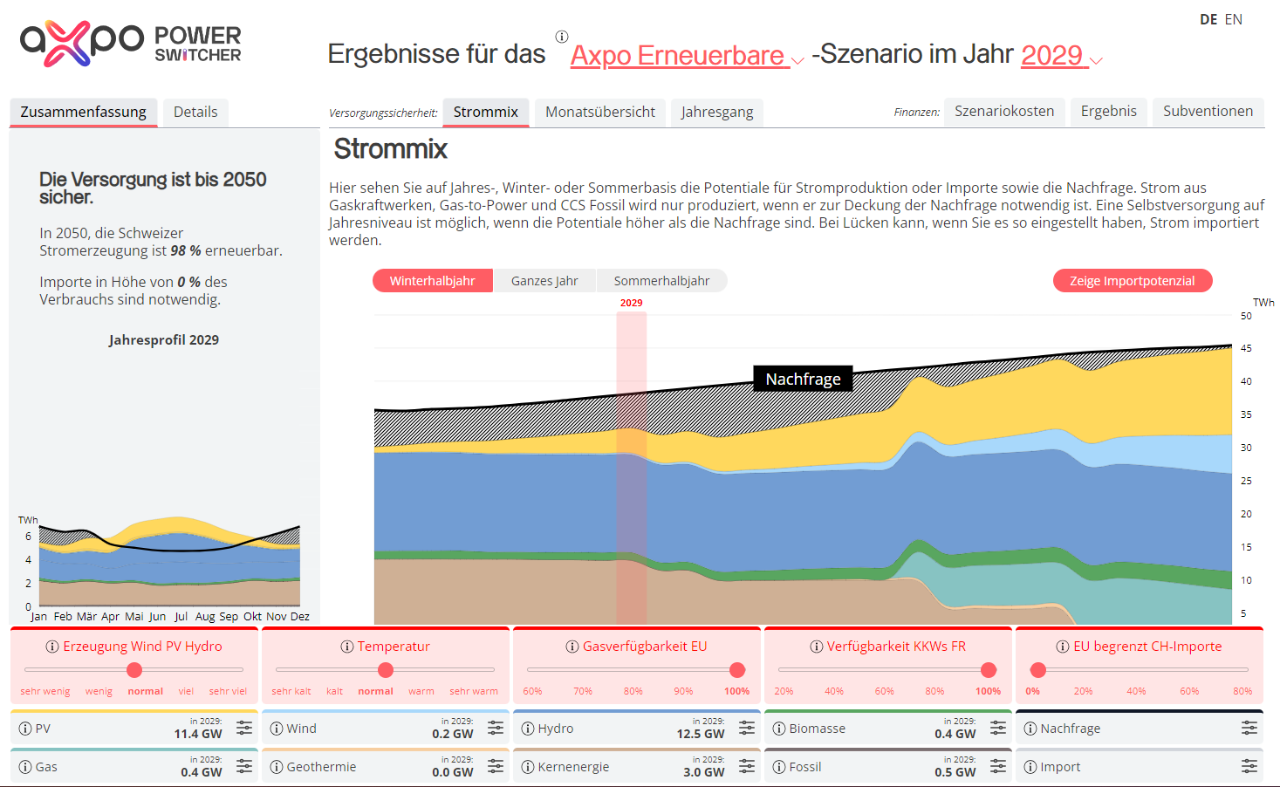
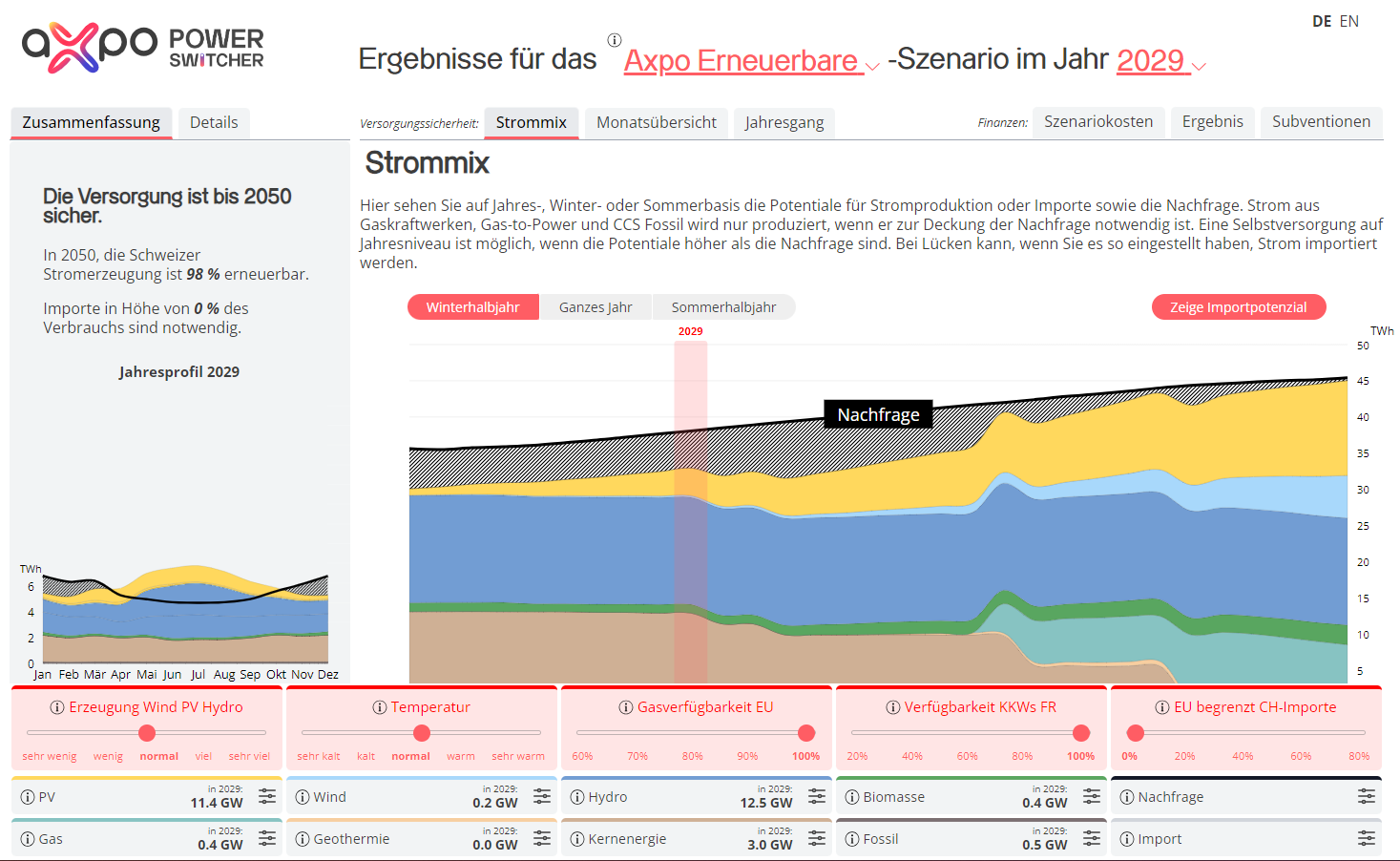
Wind energy plays a particularly important role in winter, as around two‑thirds of annual production occurs during the windy winter months. In Switzerland, this potential has so far been barely utilised, even though the technology is mature and reliable.
Modern turbines operate efficiently even at moderate wind speeds and are significantly quieter than earlier models. Studies show that Switzerland’s theoretical wind potential could amount to several dozen terawatt-hours per year – enough to make a substantial contribution to winter electricity supply. The biggest challenges today are lengthy approval procedures and local acceptance. However, new simplifications in permitting processes could help accelerate expansion. Overall, wind energy offers a sustainable, winter‑strong complement to solar energy.

Key questions and answers
Even today, Switzerland consumes more electricity in winter than it produces. Wind energy is a mature technology with considerable potential in Switzerland, meaning it can make a substantial contribution to the country’s electricity supply. The Axpo Energy Reports therefore examine the conditions under which wind energy can be expanded by 2050 — in an open-minded and fact-based manner.
The Axpo Energy Reports examined the conditions under which wind energy can be expanded by 2050 — technology-neutral and fact-based. Switzerland has a high potential for wind energy – even though each site needs to be assessed individually. Around two-thirds of annual production falls in the winter half-year (October to March). Wind energy is therefore optimally combinable with solar energy for seasonal balance. Wind energy is technologically mature and particularly cost-efficient in terms of winter electricity. Lengthy objection procedures are currently a major challenge for wind energy projects. To harness the potential in Switzerland, the acceleration decree must in particular be implemented consistently and swiftly at the cantonal level.
- Around two-thirds of annual production takes place during the winter months (October to March)
- Stable production, even during periods of low sunlight
- Can be easily combined with solar energy to balance out seasonal fluctuations. Relatively low demand for supplementary power during the winter
- The wind turbine itself requires approximately 600–1,000 m².
- During the construction phase, a temporary area of roughly 2,500–3,000 m² (approx. 0.3 ha) may be needed.
- The space required for transport routes is also carefully assessed, and any vegetation/tree clearing must be approved.