.jpg)




Axpo Energy Reports: Nuclear Energy
Nuclear energy provides reliable and CO₂‑free electricity – independent of weather and season. This makes it a stable source of winter electricity that could continue to play an important role in the future.
New reactor designs are safer, more efficient, and technologically more advanced. At the same time, any new construction in Switzerland is subject to clear legal requirements and political processes, which currently still include restrictions. From an economic perspective, new plants would require long‑term investment security and appropriate support mechanisms. Politically, there is ongoing debate about whether the existing ban on new builds should be lifted. The Energy Reports outline the conditions under which nuclear energy could once again become a key component of Switzerland’s energy system.
Key questions and answers
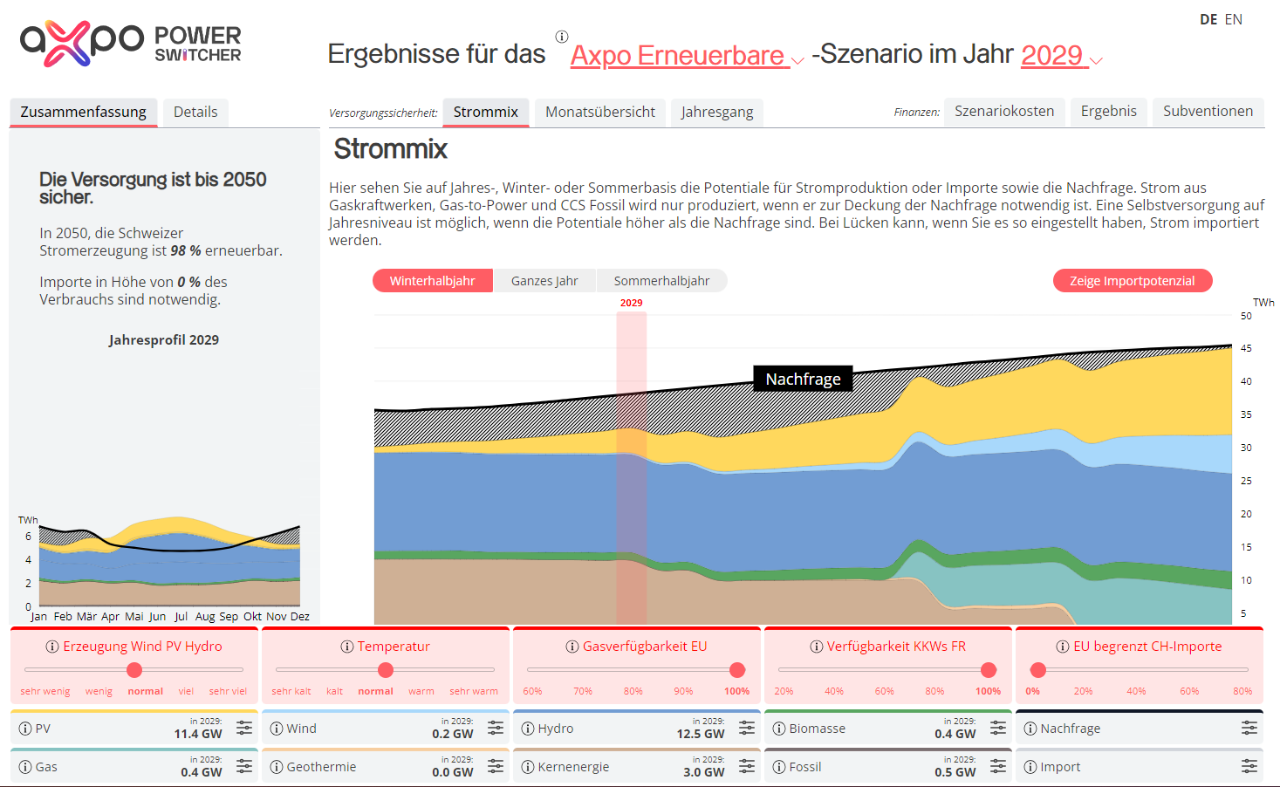
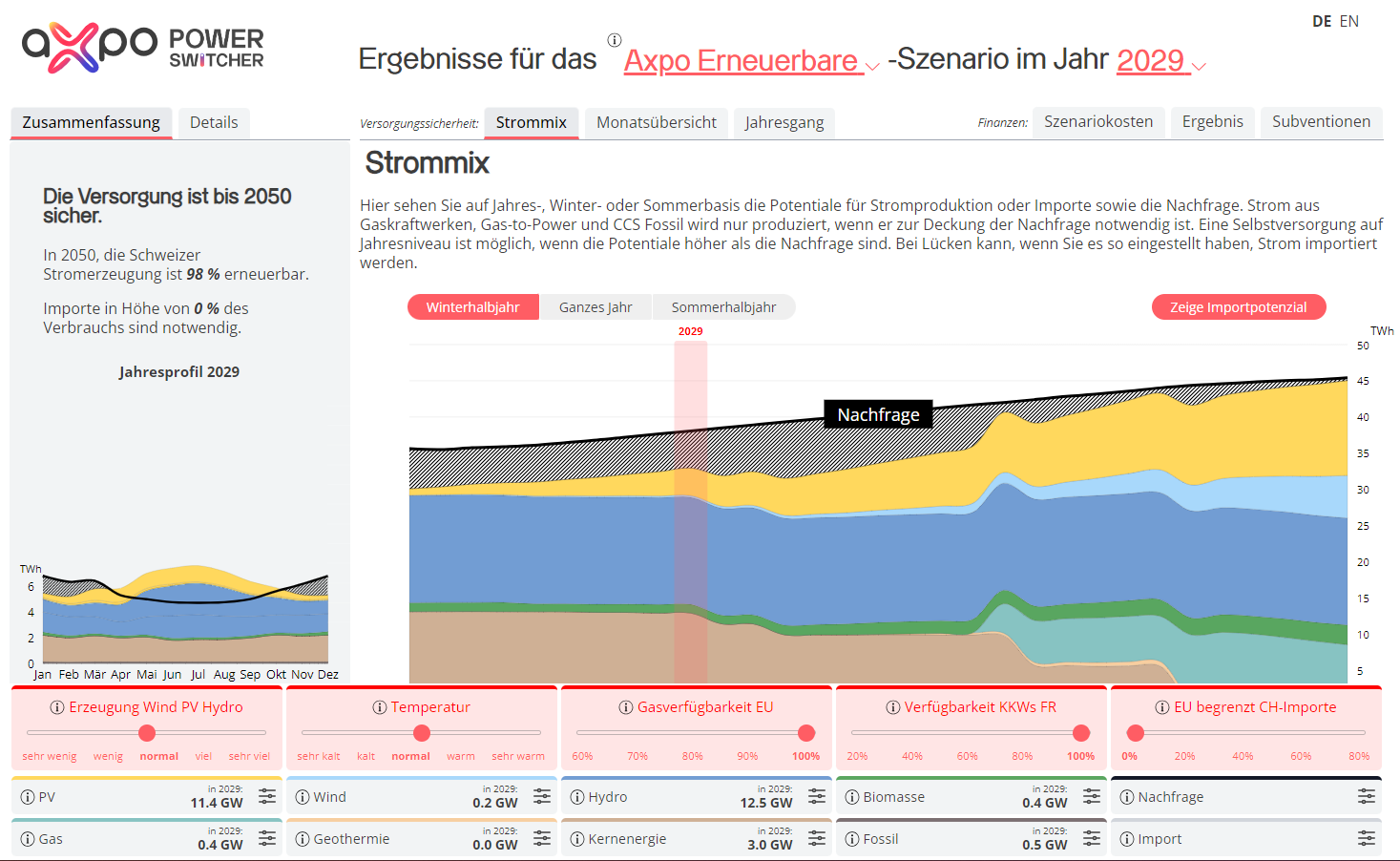
Nuclear energy currently accounts for just under 40% of winter electricity supply, thereby making a key contribution to security of supply. New nuclear power stations could ensure that nuclear energy continues to make a substantial contribution to the winter electricity supply in the future. The Axpo Energy Reports outline the conditions under which nuclear power stations could continue to make a contribution up to 2050.
A new nuclear power station would be technically feasible in Switzerland, but only if the ban on new construction is lifted, licensing procedures are accelerated, support schemes are introduced and public acceptance can be secured. This therefore requires the state to assume full responsibility for the political, regulatory and financial risks.
SMR technologies are promising, but there is as yet little commercial experience available. SMRs could offer particular advantages at sites with limited space and provide additional flexibility through their modular design. However, SMR concepts must first prove their economic and operational promise in commercial operation; international series production experience would be an essential prerequisite for a first build in Switzerland. We have therefore focused on large Gen III+ reactors in the Axpo Energy Reports.
Building a new nuclear power plant by 2050 is possible, but requires early political decisions. The political process for the necessary legal and regulatory changes would need to begin immediately following any lifting of the ban on new construction, so that the commissioning of new nuclear power plants by 2050 remains a realistic prospect.
The first step is to secure funding for project development. This phase serves to prepare for the framework licence and to gradually build up the technical and economic readiness for decision-making. Specifically, this involves assessing the feasibility of internationally proven reactor designs – such as the AP1000 or EPR – in collaboration with the manufacturers, as well as evaluating their strengths and weaknesses in terms of economic viability and practicality.
Given the challenges regarding public acceptance and implementation, it is uncertain whether the expansion of wind farms and gas-fired power stations will proceed as required. Therefore, in parallel, the way should be paved for Scenario 2, involving new nuclear power stations, in order to keep all options open. To make this possible, suitable framework conditions for new nuclear power stations would first need to be established. A first step would be to lift the ban on new construction, which Axpo explicitly supports.
For Axpo as a company, however, this second path is not a priority due to unresolved risk issues (political, regulatory, financial). Without comprehensive risk assumption by the state, the financial risks of new nuclear power plants would be unsustainable for any company. Should the electorate, however, decide in favour of new nuclear power plants with comprehensive risk assumption by the state, Axpo stands ready to support the implementation of this scenario to the best of its ability – provided its owners agree.