





Axpo submits planning application for new biogas plant in Bachenbülach
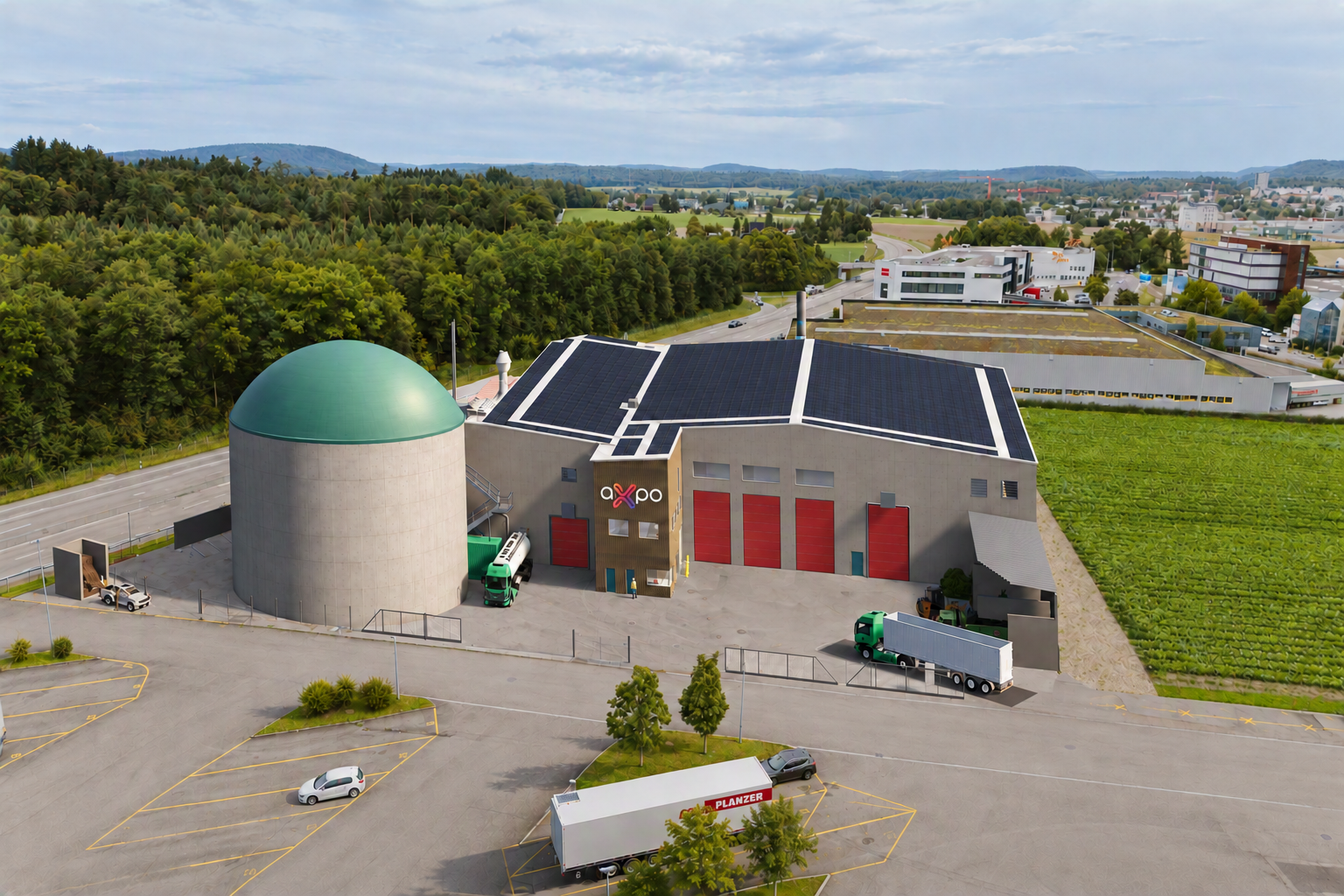
25.11.2026 - Axpo Biomasse AG plans to replace its biogas plant in Bachenbülach. The new facility will process around 30,000 tonnes of green waste and other organic waste from the Zürcher Unterland and Furttal regions each year, producing biomethane for the local gas network and natural fertiliser. It will have twice the processing capacity of the existing plant. Enclosed halls and exhaust air treatment will significantly reduce odour emissions compared with current levels. A photovoltaic system is planned for the hall roofs. Construction is scheduled to begin in the second quarter of 2027 at the earliest.
In brief:
- Axpo plans to replace the existing biogas plant in Bachenbülach with a new facility at the same site.
- The new plant will process around 30,000 tonnes of green waste and other organic waste each year, producing biomethane and natural fertiliser.
- Enclosed halls with exhaust air treatment will reduce odours. A photovoltaic system is planned for the roofs, and construction is scheduled to begin in the second quarter of 2027 at the earliest.
The existing plant will be dismantled and rebuilt at the same site in the industrial area. The planning application has been submitted to the municipality of Bachenbülach. The project follows several years of planning and feasibility assessments. An important milestone was the partial revision of the Zürcher Unterland regional structure plan, which was formally adopted by the Government Council of the Canton of Zurich on 3 December 2025. This established a key prerequisite for the project under planning law.
The existing plant was built in 1992 and expanded in 2003. After many years of operation, its equipment is reaching the end of its technical service life. The new facility will modernise the site for the future and bring it into line with current technical and legal requirements. This also includes adapting the storage of the liquid fraction of the digestate to meet the requirements of the Canton of Zurich. Axpo Biomasse AG owns the existing site and will build and operate the new plant itself.
Feedstock will consist of green waste from municipal collections and suitable co-substrates from businesses, horticulture, agriculture and food processing. Based on its projected output, the planned biogas plant could generate enough energy for more than 3,000 medium-sized apartments.
Biogas and natural fertiliser from organic waste
Green waste and other suitable organic waste will be received and prepared in enclosed halls. Delivery airlocks and high-speed doors will keep the halls closed. The halls will operate continuously under negative pressure to prevent odorous air from escaping outside in an uncontrolled manner. Exhaust air will be treated before being discharged through a stack.
Anaerobic digestion produces biogas and digestate. The digestate is separated into a solid fraction and a liquid fraction, known as press water. The biogas and the residual methane released during press water storage will be upgraded together to biomethane and fed into the existing gas network, where the biomethane can replace fossil natural gas. This makes efficient use of the energy content of the organic waste. The press water will be used as liquid fertiliser in agriculture. The solid digestate will be processed and will also be made available to private individuals free of charge for use in their gardens. The plant thus combines energy recovery from organic waste with the use of natural fertiliser, returning the nutrients it contains to the cycle.
The project also includes a facility to recover and liquefy the biogenic CO₂ produced during biomethane upgrading, making it available for subsequent use. If the CO₂ is permanently sequestered through that use, it can contribute to negative emissions. Whether the CO₂ facility is built will depend on securing long-term offtake on commercially viable terms. Axpo is therefore seeking suitable buyers for around 2,200 tonnes of biogenic CO₂ per year.
Photovoltaics for on-site consumption and grid feed-in
A photovoltaic system with a capacity of around 600 kWp is planned for the hall roofs. It is expected to generate approximately 700 MWh of electricity per year. A large proportion will directly meet the plant’s electricity needs, reducing the amount of electricity drawn from the grid. Surplus solar electricity will be fed into the medium-voltage network of Elektrizitätswerke des Kantons Zürich (EKZ) via the site’s own transformer station.
Next steps
The application will be published once the municipality of Bachenbülach’s Building and Infrastructure Department has completed its preliminary review and all documents required for publication are available. The start of construction will depend on the permitting process. Axpo aims to begin implementation promptly once the necessary permits have been obtained. Under the current schedule, construction is planned to begin in the second quarter of 2027 at the earliest.
A leader in organic waste processing
Axpo Biomasse AG processes around 340,000 tonnes of biomass each year at its 15 anaerobic digestion plants and nine composting sites in Switzerland. The organic waste is converted into biogas, electricity, heat, natural fertiliser and compost. Axpo Biomasse AG produces around 80 GWh of energy annually, equivalent to the energy consumption of approximately 18,000 households.
- News release View Send email Download
- Visualisation Bachenbülach Send email Download
Axpo Holding AG
Corporate Communications