
.jpg)





Green light for new Mapragg doping power plant
16.01.2026 – Kraftwerke Sarganserland AG (KSL) has received both the building permit and the necessary additional concession for the new Mapragg doping power plant. This means that previously unused residual water volumes can now be used to produce around 950 megawatt hours of renewable hydroelectric power per year. Following an approval process without any objections, the construction project can now go ahead.
In short:
Kraftwerke Sarganserland AG is planning a new doping power plant at the Mapragg equalising reservoir
Now that the building permit and additional concession have been granted, the new power plant can be built
Commissioning is scheduled for 2027
Kraftwerke Sarganserland AG (KSL) has received both the building permit and the necessary additional concession for the new Mapragg doping power plant. This means that previously unused residual water volumes can now be used to produce around 950 megawatt hours of renewable hydroelectric power per year. Following an approval process without any objections, the construction project can now go ahead.
Use of previously unused residual water volumes
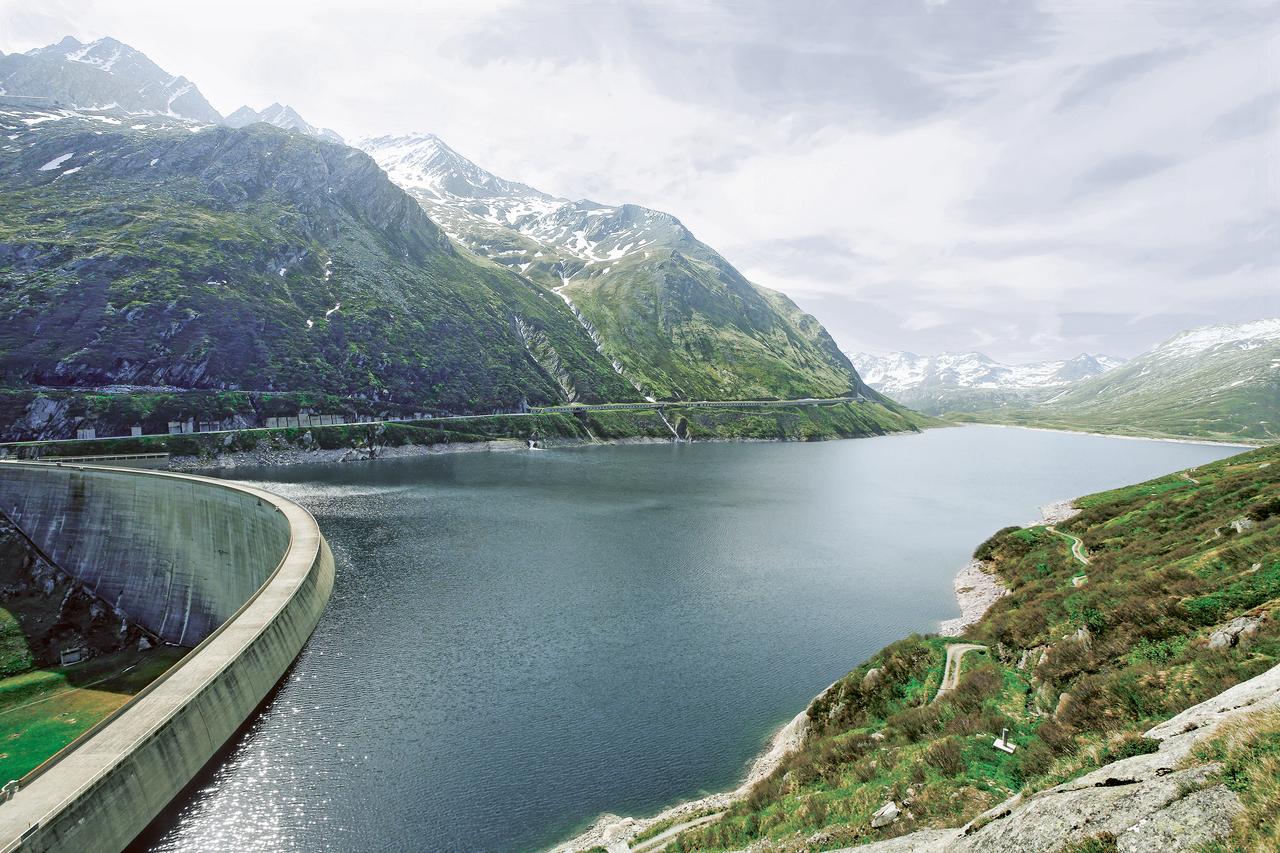
As officially decreed, KSL discharges previously unused residual water volumes of 200 to 600 litres per second from the Mapragg equalisation reservoir below the dam wall of the Mapragg power plant directly into the Tamina. These water volumes are not currently used for electricity production. With the planned construction of the new doping power plant, KSL intends to exploit this potential in future and generate additional renewable electricity.
Project solution with no environmental impact
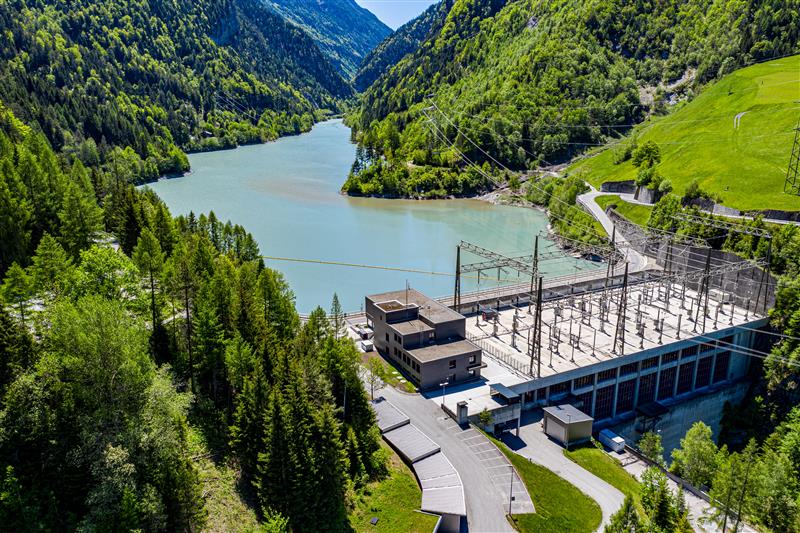
The optimisation project involves replacing one of the two existing dosing facilities in the bottom outlet chamber of the Mapragg power plant dam with a turbine and integrating it fully into the existing plant technology. The second dosing facility will remain in place as a backup, ensuring that the required residual water volumes are maintained at all times. There will be no change to the water flow or the residual water volumes; only the pressure difference between the Mapragg equalisation reservoir and the bottom outlet will be used. As all the technical components of the new doping power plant are located within the existing Mapragg power plant, the project will have no significant environmental impact during the construction phase. Nor will it have any new environmental impact during the operational phase. The project solution is both ecologically and technically optimal and makes a concrete contribution to the expansion of renewable electricity production in Switzerland.
Additional renewable electricity – even in winter
By using the water supply, around 950 megawatt hours of renewable electricity can be generated annually from hydropower – enough to supply around 200 households. Around one third of this electricity is generated during the peak winter months. With an installed capacity of less than 0.3 megawatts, the new doping power plant is classified as a small hydropower plant. The investment costs amount to less than one million Swiss francs. Overall, this is a sustainable, forward-looking investment in a completely renewable electricity supply.
Approval process without objections
The framework conditions for the construction project were agreed in advance with the Office for Water and Energy (AWE) of the Canton of St. Gallen. An additional concession to the existing main concession from 1960 creates the legal basis for the future energy use of the existing water supply in the new Mapragg water supply power plant. The public requirements for the submitted building and concession applications, which were carried out by the political municipality of Pfäfers and the AWE, were met without any objections; KSL therefore now has both the building permit for the new doping power plant and the additional concession for its operation.
Commissioning planned for 2027
With the permits granted, KSL can now press ahead with project planning. If everything goes according to plan, the new Mapragg water supply power plant is scheduled to go into operation in 2027.
Kraftwerke Sarganserland AG (KSL) is a partner company of Axpo Power AG and the Canton of St. Gallen. Axpo holds 98.5% of the share capital, with the Canton of St. Gallen holding the remaining 1.5%.
- Image Send email Download
- News release View Send email Download
Axpo Holding AG
Corporate Communications